Iran moves to curb media reports that could fuel panic over UN sanctions
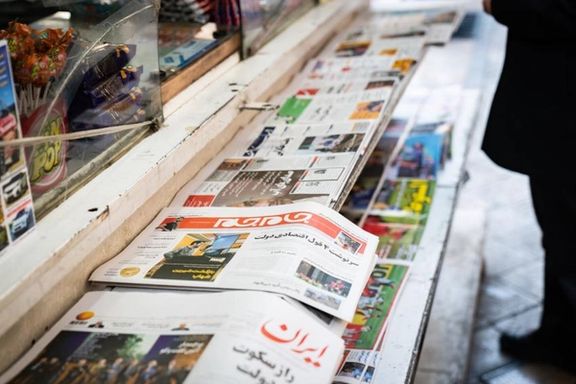
Iran’s Ministry of Culture and Islamic Guidance has issued a confidential directive to domestic media, instructing outlets to limit coverage of the European move to trigger the UN snapback mechanism and avoid content that could cause public concern or market instability.
Confidential order restricts tone and content
The directive, sent to newsroom chiefs and editors, outlines six points aimed at controlling how the issue is reported. It calls on newsrooms to avoid “emotional,” “crisis-oriented,” or “provocative” headlines and urges editors to present the snapback as a manageable development. The stated goal is to preserve “psychological calm” in society.
Media are specifically told to refrain from publishing content that highlights economic risks, such as inflation, currency devaluation, or the potential impact on gold and foreign exchange markets. Such coverage, the ministry warns, could increase inflationary expectations or contribute to public anxiety.
Instructions call for emphasis on Iran’s resilience
Instead, the directive advises the use of regional experts and commentary that frames the snapback as a sign of European weakness or dependence on the United States. Media are encouraged to highlight Iran’s ability to withstand sanctions and emphasize the country’s “strength in facing pressure.”
The publication of reports that suggest a negative or uncertain outlook for the future is discouraged. Outlets are instructed to “avoid portraying a bleak future” and to focus instead on narratives of continuity and resistance.
Coverage of Western policy encouraged, not domestic impact
According to the directive, media should shift their focus toward criticizing Western governments and highlighting what it describes as contradictions and internal crises in Europe and the US.
The guidance advises against reporting that could fuel debate over the domestic implications of renewed UN sanctions or revive concerns over Iran’s access to oil revenues and currency reserves. No timeline was provided for how long these restrictions should remain in place.
Recent economic reporting limited after new warnings
The directive follows recent domestic reports warning that snapback sanctions could worsen inflation and further weaken the rial. Earlier this week, the Tehran Chamber of Commerce projected that the dollar could reach 1.65 million rials under pessimistic scenarios. That report was later downplayed under apparent pressure from security agencies.
As Iran International exclusively reported, members of the chamber’s international affairs team were questioned this week by the IRGC’s intelligence unit over the economic forecast, and senior officials were instructed not to speak publicly about it.
The Ministry of Culture has not officially commented on the new guidelines. Iranian state media and major news agencies have so far reported the snapback process using neutral language and limited economic analysis.
Part of broader restrictions on public discourse
The new instructions come amid heightened sensitivity within Iranian institutions over public reaction to international developments. The approach reflects a broader pattern of preemptive media control during major diplomatic or economic events.
Iranian media outlets operate under oversight from multiple government agencies, including the Ministry of Culture, the Supreme National Security Council, and intelligence bodies. Directives such as this one are typically circulated in private and not publicly acknowledged.
Hardliners in Iran feel vindicated by a European move on Thursday to reimpose international sanctions, seeing it as proof of both implacable foreign hostility and the failure of hapless home front moderates.
Outspoken conservatives had for over a decade seethed at the diplomacy which clinched the 2015 international nuclear deal the Joint Comprehensive Plan of Action as a surrender of Iran's sovereignty to hostile outside powers.
"The JCPOA, the imposition of the trigger mechanism, the US withdrawal from the JCPOA and the 12-day war were all pieces of an American and Israeli plan," fulminated Mahmoud Nabavian, the deputy chairman of the Iranian parliament's national security and foreign policy committee.
"The authors the JCPOA's imposition and the trigger mechanism on the nation, some of whom are now brazenly seeking to make concessions to the enemy, must be tried," he added on X, apparently referring to Iranian moderates.
Britain, France and Germany on Thursday triggered a 30-day process - the so-called "snapback" mechanism - to reimpose UN sanctions on Iran over its nuclear program in a formal letter sent the UN Security Council.
Iran condemned the European sanctions move as malicious and illegal but stopped short of mentioning specific consequences and instead warned of an "appropriate response."
Just before the European move, another ultraconservative member of the parliamentary committee Alaeddin Boroujerdi mooted blocking the energy exports of its Arab neighbors if sanctions choked off its own flows.
"If Iran cannot export its oil, certainly something will happen that will stop the exporting of others’ oil," Tehran’s leading economic daily Donya-ye Eghtesad quoted him as saying. "We won’t sit and watch the compromising of all of our interests."
The threat has been repeatedly voiced by various Iranian politicians, including former presidents Akbar Hashemi Rafsanjani and Hassan Rouhani, since the mid-1980s when Iran first attempted to close the Strait of Hormuz.
That move prompted a swift US military response which promptly decimated Iran’s naval forces in the Persian Gulf and destroyed two major oil platforms.
Kayhan on closing off commerce
The Kayhan newspaper, closely linked to Supreme Leader Ali Khamenei’s office, warned against caving to Western demands to negotiate and advocated strength.
"The response to the West’s threat should be a threat rather than negotiating and taking a passive approach," it wrote a commentary.
"The West’s repetitive scenario leaves no room for optimism and expectations. Our experience shows that the West understands only the language of force," it added. "Iran should take strict decisions, from exiting the Non-Proliferation Treaty (NPT) to limiting access to the Strait of Hormuz, and show that the enemy’s threats will not remain unanswered."
For decades, Kayhan has advocated for closing the Strait of Hormuz so fervently that one social media user joked, “Let’s close the strait at least for 10 minutes only to do a favor to Kayhan’s editor!”
"Negotiating with the United States and Europe will lead to nothing other than humiliation, deceit, and wasting time," it said in another article.
Meanwhile, Kayhan dismissed any connection between the trigger mechanism and UN Security Council Resolution 2231, which the three European powers are invoking to reinstate pre-2015 sanctions on Iran.
Amid the radical reactions, one relatively moderate voice emerged from Ahmad Bakhshayesh Ardestani, a conservative MP and yet another member of the National Security and Foreign Relations Committee.
Iran, he said, still had one month to respond to European demands and a boon could come in the form of Russia taking over the presidency of the UN Security Council in October.
Still, the European troika's move appeared designed to forestall that possibility with the 30-day process to restore international sanctions likely to be complete before the periodic change in the Security Council's leadership.
The missile barrages launched by Iran earlier this year caused record destruction in Israel, with more than 53,500 damage claims filed in just 12 days of fighting, the Israel Tax Authority said, according to a report by Ynet on Thursday.
“The direct damage is now estimated at no less than NIS 4 billion ($1.1 billion), and the indirect damage, which has yet to be calculated, will amount to several billion more,” Tax Authority Director Shay Aharonovich said.
Major institutions, including the Weizmann Institute of Science and Soroka Medical Center, suffered heavy losses, while many businesses were forced into prolonged shutdowns, he added.
Israel launched the 12-day air campaign against Iran in June, with brief support from the United States, targeting nuclear sites and killing senior military officials and nuclear scientists. The strikes crippled much of Iran’s air defense network and damaged a significant portion of its ballistic missile arsenal, Israel said.
Property losses made up the bulk of claims. Of 41,962 filings for damaged structures, 36,928 involved private residences, with hundreds of homes completely destroyed.
The state will have to fund alternative housing for displaced families until rebuilding can be completed, a process expected to take months if not years, officials said.
The commercial sector was also hit hard. Businesses filed 5,108 claims, including hundreds of shops and offices destroyed beyond repair. Vehicle damage reached unprecedented levels, with at least 5,400 cars damaged or destroyed.
9,803 claims were submitted through a fast-track process, while 28,129 direct-damage claims were processed within two months, according to the authority.
So far, the Property Tax Compensation Fund has paid out NIS 1.6 billion ($430 million) for direct damages.
Claims for indirect losses, such as business interruptions, nearly doubled direct claims, reaching 98,569 in just under two weeks of fighting. About 60,000 of these have already been processed, with NIS 1 billion ($270 million) in partial compensation paid.
Officials cautioned that the final tally—factoring in both direct and indirect damages—will end up several times higher than the current estimates, underscoring the unprecedented financial cost of Operation Rising Lion.
Iran has charged comedian Zeinab Mousavi over her satire of Ferdowsi, the 10th-century Persian poet behind the epic Shahnameh, using the controversy to stir patriotism after the war with Israel.
Iran has charged a comedian over a satirical sketch mocking Ferdowsi, the 10th-century poet behind the epic Shahnameh, after the performance provoked uproar across society.
The sketch, which recited verses of the Shahnameh with irreverent commentary, drew condemnation online and from prominent cultural figures who called it an insult to Iran’s heritage.
The Shahnameh, chronicling Iran’s mythical past and heroic kings, is widely regarded as a cornerstone of national identity.
The comedian at the center of the storm, Zeinab Mousavi—known by her stage name Empress Kuzcooo—said she had not intended for the recording to circulate.
But prosecutors accused her of producing “offensive content”, framing it as an insult to Ferdowsi and a provocation to public sentiment.
Tasnim, a news agency affiliated with the Revolutionary Guards, cast the affair in those terms.
“Hostility toward Iran is one of the round-the-clock activities of Zionists and their agents. Just as the brave Iranian people defended the country against attacks from the United States and Israel, they will also defend the symbols of this noble land.”
Mousavi told Rouydad24 that the YouTube program scheduled to air the sketch had promised to cut the segments, and she was unaware of their circulation on social media.
“Comedy has no boundaries,” she said. “I have harmed no one.” She did not issue an apology.
Clerics vs Ferdowsi
Some hardline Shia clerics have long viewed Ferdowsi with disdain over the Shahnameh’s anti-Arab verses and his praise for pre-Islamic monarchy.
Under their influence, murals depicting scenes from the epic were removed from Mashhad, and a statue of Ferdowsi was blocked from installation at Ferdowsi University.
Supreme Leader Ali Khamenei, however, has downplayed these objections, presenting Ferdowsi as a devout Shia and framing the Shahnameh as consistent with Islamic thought.
Critics call the state’s current posture opportunistic.
“Until yesterday they were erasing Shahnameh murals,” wrote one user, Soroush. “Now, to preserve the regime in wartime, they wave nationalist symbols. Tomorrow they might even parade Achaemenid soldiers.”
Mousavi, a 35-year-old software graduate, is no stranger to controversy. Her biting humor, scathing critiques of clerics and politicians, and occasional sexual references have repeatedly attracted the authorities’ attention.
She has been arrested several times on charges such as “insulting religious sanctities,” often over satire targeting compulsory hijab laws.
The case has reignited debate about freedom of expression and the limits of satire in Iran.
“Insulting Ferdowsi and his enduring masterpiece, the Shahnameh, is an affront to our cultural roots. It deserves criticism, but the response should not be prison,” wrote reformist politician Azar Mansouri on X.
“Judicial punishment neither builds culture nor fosters respect.”
Journalist Milad Alavi echoed the point: “Zeinab Mousavi’s jokes about Ferdowsi were at times offensive, but they were not a crime. Criminal prosecution undermines freedom of expression and erodes the rule of law.”
Iran’s currency weakened sharply on Thursday as European nations prepared to trigger the return of United Nations sanctions under the snapback mechanism, deepening economic pressure on the Islamic Republic and adding to uncertainty around its nuclear program.
The sharp drop extends a steady decline in the rial over recent weeks. Currency dealers quoted the dollar at around 1,030,000 rials on the open market, according to local reports, compared to 957,000 rials last week.
Reuters has reported that Britain, France and Germany could begin the snapback process as early as Thursday after Iran failed to resume talks or restore cooperation with the International Atomic Energy Agency. The three countries set a late August deadline earlier this month.
Markets react to snapback risk
The currency’s continued slide has heightened concerns among traders and the public, as sanctions could further restrict Iran’s access to global markets and increase pressure on imports, inflation, and employment.
Once triggered, the snapback process leads to the automatic reimposition of UN sanctions after 30 days unless the Security Council adopts a resolution to continue lifting them — a step that any permanent member can veto.
The measures would freeze Iranian overseas assets, ban arms deals with Tehran, and penalize missile development activities. They could also affect oil sales to China, one of Iran’s top customers.
Earlier this month, Iran International reported that Iran’s Intelligence Ministry has warned senior officials and companies to prepare for renewed economic disruptions. Confidential guidance cited risks of "severe currency fluctuations, reduced purchasing power, increased unemployment, layoffs, and heightened social discontent."
Business group warns of worst-case currency spike
Iran’s Chamber of Commerce this week published a report forecasting three scenarios for the economy in the event of snapback sanctions. In its most pessimistic case, the rial could fall to 1.65 million per dollar, with annual inflation reaching 90 percent by the end of the year. Economic growth was projected to remain negative under all scenarios.
Time running out
The current UN resolution allowing use of the snapback mechanism is set to expire on October 18. Russia, which will assume the rotating presidency of the UN Security Council that month, has floated proposals to extend the measure. After the resolution expires, any future effort to restore UN sanctions would likely face a veto from China or Russia.
Under the existing mechanism, any party to the 2015 nuclear deal can initiate snapback by notifying the Security Council of Iranian non-compliance. Sanctions would then be automatically reinstated after 30 days unless the Council votes to continue lifting them — a step that can be blocked by any permanent member.
In recent weeks, Iran has made only limited diplomatic efforts to prevent that outcome. Foreign Minister Abbas Araghchi said last week that talks alone were unlikely to avert further escalation, noting that negotiations had been ongoing when the June conflict with Israel erupted. “Sometimes war is inevitable,” he said in an interview with state media.
The IAEA, meanwhile, has called for inspections to resume “as soon as possible.” Inspectors were recently present to observe fuel replacement at the Bushehr nuclear reactor, operated with Russian support, but broader access to key enrichment and research sites remains suspended.
The government will soon be unable to cover health care expenses, an Iranian parliament member warned on Wednesday, citing rising costs, insurance debts, and an aging population.
The Islamic Republic risks losing the ability to fund its health system, said Reza Jabbari, a member of parliament’s presiding board, during a meeting with Health Minister Mohammadreza Zafarghandi.
“Based on submitted reports, 70 percent of insurance resources are spent on medicine and equipment, which could be significantly reduced through strategic purchasing,” Jabbari added.
Without reform, he said, demographic and dietary pressures could create in health care the same shortage already seen in Iran’s energy sector.
Iran may soon face a surge in chronic and non-communicable diseases, Jabbari warned.
“The country will no longer be able to pay health costs if the current situation continues.”
Debt to the pharmaceutical supply chain
The warning came a day after Shahram Kalantari, head of Iran’s Pharmacists Association, described the government as “the main debtor to the pharmaceutical supply chain.” Insurers have failed to pay most of their obligations this year, he said.
A hospital in Iran
“Health Insurance owes us $100 trillion rials ($100 million), Social Security owes $150 trillion rials ($150 million), and the Daroyar plan owes $90 trillion rials ($90 million) since July,” Kalantari said Tuesday.
The drug industry can only remain stable for 170 to 180 days if payments continue to be delayed, he cautioned. After that, shortages of essential medicines are likely.
Kalantari has previously said 80 percent of pharmacies in the country are on the brink of bankruptcy due to mounting debts from insurers and subsidy programs.
Rising burden on households
Other lawmakers have also highlighted the growing strain on families. Fatemeh Mohammadbeigi, deputy chair of the parliament’s Health Committee, said Iranians now pay about 70 percent of medical costs out of pocket.
She described the insurance system as “inefficient and near bankruptcy” due to poor management and a failure to consolidate coverage.
“This figure should be reversed, with people paying 30 percent and the government 70 percent,” Mohammadbeigi said earlier this month. Falling insurance coverage particularly harms low-income groups, she added.
Labor activists have also pointed to shrinking access. Abbas Shiri, a board inspector for the National Construction Workers’ Union, said on August 2 that fewer than 50,000 workers have gained insurance since 2020, leaving hundreds of thousands waiting.
The combined warnings from lawmakers, pharmacists, and labor groups underscore a health system burdened by debt, demographic pressures, and inadequate insurance coverage, with officials conceding that sustainability is in doubt.