Iran demands UN hold US accountable for Israeli attacks
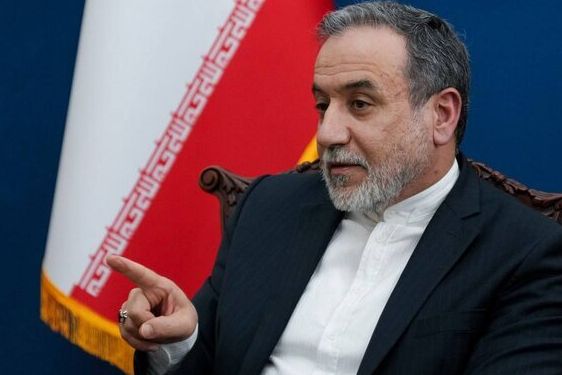
Iran's Foreign Minister Abbas Araghchi, File photo
Iran's Foreign Minister Abbas Araghchi on Wednesday urged the United Nations to hold the United States accountable for Israeli strikes on Iran, demanding in a letter to the UN chief and Security Council that Washington pay reparations.
"The United States is obliged to fully compensate Iran and Iranian citizens for the material and moral damages resulting from these violations," Araghchi wrote in a letter, official media reported on Wednesday.
Araghchi called for an emergency session, independent investigation, ceasefire enforcement, sanctions, reparations and General Assembly condemnation.
Trump said last week the US directed Israel’s initial attack on Iran during the June conflict.
“Israel attacked first. That attack was very, very powerful. I was very much in charge of that.” Trump said. “When Israel attacked Iran first, that was a great day for Israel because that attack did more damage than the rest of them put together.”
Compensation demand
Tehran first demanded US compensation in July over the war's damages, including strikes on nuclear sites—tying it to nuclear talks resumption. The US State Department dismissed it in August as "ridiculous," rejecting any liability.
Iran's UN Permanent Representative Amir Saeid Iravani wrote to Guterres and the Security Council last week, registering Trump's admission as "incontrovertible evidence" of US leadership in the June 12-day war, which caused civilian deaths and nuclear site damage.
The United States and Israel launched strikes on Iranian facilities in June after talks over Tehran’s nuclear program collapsed. A ceasefire ended the 12-day conflict, but inspections of damaged sites remain suspended under Iranian law.
The intelligence wing of Iran's Revolutionary Guards launched a security operation targeting 400 people linked to Iran Academia, an online platform offering free Farsi courses in social sciences and humanities, state media reported on Wednesday.
"Islamic Revolutionary Guard Corps (IRGC) intelligence identified 400 members inside and outside Iran," state broadcaster IRIB reported. "Some have been summoned, detained, or warned to cease collaboration with this academic circle."
It described the operation as a move to counter "soft overthrow (efforts) ... via cultural and educational infiltration."
The broadcast featured blurred photos of alleged detainees, organizational charts mapping the network and commentary from experts justifying the actions as defense against foreign-funded subversion.
No names or exact arrest numbers were disclosed.
Iran Academia, registered in the Netherlands and founded in 2012 amid Iran's restrictions on higher education in social sciences, says it aims to served "the general public, civil society, and disadvantaged groups" according to its official website.
"70% are from Iran—spanning 21 of 31 provinces—with 40% female, 30% ethnic minorities, and 15% religious minorities," the site said.
The platform offers Massive Open Online Courses (MOOCs) on topics like gender and budgeting, transitional justice, social advocacy and forced migration rights.
State media accused its board members of promoting "hot-button" issues—gender equality, ethnic rights and implicit regime critique via media appearances, labeling it a tool for "soft regime change" backed by Dutch, EU and United States Agency for International Development (USAID) funding.
The move prompted nearly 900 Iranian activists and intellectuals to issue a statement calling for unity against what they called "the suppression of thought and expression,” describing the crackdown as “a desperate attempt by a failing regime to stifle intellectual vitality.”
Iran has yet to allow UN inspectors to visit nuclear sites hit by Israeli and US airstrikes in June, the International Atomic Energy Agency said in a confidential report on Wednesday, saying verification of Tehran’s enriched uranium “long overdue.”
“The Agency’s lack of access to this nuclear material in Iran for five months means that its verification is long overdue,” the IAEA said in a report to member states seen by Reuters.
"It is critical that the Agency is able to verify the inventories of previously declared nuclear material in Iran as soon as possible in order to allay its concerns ... regarding the possible diversion of declared nuclear material from peaceful use," the agency quoted the IAEA report as saying.
The Vienna-based nuclear watchdog has not been able to confirm the amount of enriched uranium in Iran’s possession since June, when Israeli and US strikes hit its main enrichment sites at Natanz, Isfahan and Fordow during the 12-day conflict.
Before the attacks, inspectors had verified about 440 kilograms of uranium enriched to 60 percent purity—enough, if further refined, for roughly 10 nuclear weapons under IAEA criteria.
IAEA says inspections hinge on Iran’s overdue report
Under its obligations as a party to the Nuclear Non-Proliferation Treaty, Iran must submit a detailed report on the status of the bombed facilities “without delay,” but has yet to do so, the IAEA said. Only after such a report is received can inspectors return to the damaged sites.
The agency said it has so far only accessed some of the 13 nuclear facilities that were “unaffected” by the strikes, and none of the seven that were hit. It warned that the delay means it has lost “continuity of knowledge” of Iran’s uranium stocks, making it harder to re-establish a complete picture of the country’s nuclear activities.
The IAEA also reminded member states that its own guidelines require it to verify a country’s stock of highly enriched uranium every month.
Despite repeated requests since June, Iran has not allowed full inspections to resume. A plan announced in Cairo in September to restore cooperation has stalled, and Tehran now says the agreement is void.
IAEA chief urges return to diplomacy
IAEA Director General Rafael Grossi said last week that Iran still retains the technical capability and sufficient material “to manufacture a few nuclear weapons,” despite what he called “severe damage” to its program. He said diplomacy remained the only path toward a durable solution.
The IAEA’s Board of Governors found Iran in non-compliance with its nuclear obligations in June after the agency said Tehran failed to explain the presence of undeclared nuclear material at several locations.
Since then, Iranian officials have accused Grossi of bias, with some state media describing him as an Israeli asset. The conservative newspaper Kayhan, overseen by the Supreme Leader’s office, even called for his execution after the June report.
A confidential survey has found that more than nine in ten Iranians are unhappy with the country’s direction, the Tehran-based news site Rouydad24 reported on Wednesday citing an unnamed polling organization.
“What is clear is that total public satisfaction with all governments since the revolution is now overshadowed by a 92 percent dissatisfaction with the country’s current situation,” Rouydad24 wrote.
The report said the study was conducted by a recognized polling center that often carries out research for state institutions.
It assessed public views of Iran’s governments from the early years of the Islamic Republic to the present, ranking administrations by their perceived performance.
The data have not been released publicly, but Rouydad24 said “the most striking outcome was widespread discontent among respondents across the country.”
According to the outlet, “the level of satisfaction with Mahmoud Ahmadinejad’s administration was highest overall,” while those of “Hassan Rouhani and Masoud Pezeshkian ranked lowest.” The report said opinions in Tehran differed from other regions, with “lower popularity levels recorded in the capital.”
Poll prepared for internal use
The poll was prepared for internal use by decision-makers and was not intended for public release. Rouydad24 said “similar internal studies have long been carried out by various institutions to measure public sentiment and help guide policymaking.”
The publication noted that the results align with other recent research showing growing mistrust of political institutions and frustration over economic hardship. It said that although the time and context of each government shaped public expectations, “overall dissatisfaction across all administrations is now unprecedented.”
The findings echo a separate survey released earlier this month by the Netherlands-based GAMAAN institute, which found that most Iranians believed Israel prevailed in the June war and favored direct negotiations between Tehran and Washington. That survey also showed rising demand for change in Iran’s political system and declining confidence in its leadership.
A Guards-linked outlet has criticized an Iranian standards official for sitting at the same roundtable as an Israeli representative at last month’s ISO meeting in Rwanda, warning that such contact could carry legal penalties.
Fars News Agency said the photos showed Farahnaz Ghollasi, deputy head of Iran’s National Standards Organization, seated at the same table as Gilad Golub, chief executive of Israel’s Standards Institution, during the Kigali conference held from October 6 to 10. It said the images, later removed from the ISO website, were verified through its own checks.
The outlet called the encounter “unprecedented” under Iranian policy, noting that law prohibits any contact or cooperation with Israeli institutions and can lead to imprisonment or permanent dismissal from public service. It also recalled that Iranian athletes have long refused to compete against Israelis in international events.
Fars added that the episode came shortly after the June war between Iran and Israel and noted that the sister of Farzaneh Ansari, who led Iran’s delegation to the ISO meeting, was among those killed in Israeli strikes during the conflict.
The agency also repeated earlier conservative criticism of Ghollasi’s appearance at international gatherings, saying she had previously been reprimanded for dress code violations.
Golub’s office told Iran International that he had sat at a shared conference table as part of a multilateral discussion and that “no direct meeting took place.”
It added, “We did not know the woman sitting opposite was Iranian, head covering does not necessarily indicate nationality."
Iran and Israel have no diplomatic ties, and Iranian delegates are typically instructed to avoid any engagement with Israeli representatives. The ISO annual meeting in Kigali brought together officials from more than 160 member states to discuss emerging global standards.
The son of a British couple jailed in Iran on spying charges has implored the UK government to secure their release before Christmas, the BBC reported on Tuesday.
Joe Bennett said his mother, Lindsay Foreman, and her husband, Craig, were arrested in January while traveling through Iran on a world tour. Both are being held in Tehran’s Evin prison and deny the charges.
“My family can’t carry on like this,” Bennett said. “This can’t be normalised. Silence is complicity.”
He said Mrs. Foreman is isolated and surrounded by people who do not speak English, while her husband is suffering from an untreated tooth abscess. “Every day is a waiting game, not knowing if she’s okay,” he said. “It’s a nightmare that never ends.”
The UK Foreign Office said it is providing consular support and continues to raise the case with Iranian officials.
The Foremans were tried in October, when relations between London and Tehran hit new lows after Britain and its European partners reimposed sanctions on Iran over nuclear concerns. Family members told the BBC they were not allowed to attend the hearing.
France reports release of detained nationals
In recent weeks, Bennett said he has watched France secure the release of its detained nationals and urged British leaders to act. “The French didn’t wait,” he said. “Their president spoke up and their citizens came home. Why hasn’t Britain done the same?”
Iran freed two French citizens, Cécile Kohler and Jacques Paris, earlier this month after more than three years in custody. President Emmanuel Macron said the pair had left Tehran’s Evin prison and were en route to the French Embassy, calling it “a first step” in ongoing dialogue between Paris and Tehran.
Earlier, Bennett told the Daily Telegraph the family was open to appealing for help from US President Donald Trump, who has recently signaled a willingness to re-engage diplomatically with Tehran. The family met Foreign Secretary Yvette Cooper last month to press for progress.
Rights groups have described the case as part of a wider pattern of “hostage diplomacy” by Tehran, which denies detaining foreigners for political leverage.