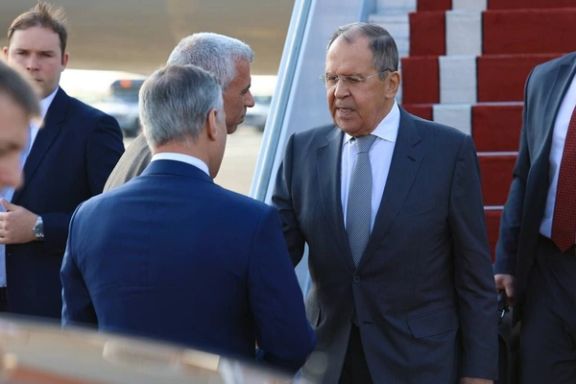
The Russian Foreign Minister Sergei Lavrov arrives
Russian Foreign Minister Sergei Lavrov’s visit to Tehran has sparked speculation in Iranian media about whether he is carrying a message from Washington or pushing Moscow’s own agenda at Iran’s expense.
Tehran and Moscow say Lavrov and his Iranian counterpart, Abbas Araghchi, will discuss mutual relations, trade, and economic cooperation, as well as key international issues, including the situation in Syria, during the one-day visit.
The visit follows discussions in Ankara on Monday and comes just a week after his meeting with US Secretary of State Marco Rubio in Riyadh.
Delivering a message from the United States to Iran?
Iranian media, analysts, and the public have closely scrutinized recent visits by high-ranking foreign officials to Tehran, including Lavrov and the Emir of Qatar, Sheikh Tamim bin Hamad Al Thani, who met with Iran's Supreme Leader Ali Khamenei last week. These visits are widely interpreted as potential mediation efforts between Tehran and Washington or as channels for delivering messages from the Trump administration.
A commentary published Tuesday by Iran’s official news agency, IRNA, acknowledged that the purpose of Lavrov’s visit might extend beyond the official agenda. However, it argued that many experts doubt Lavrov is carrying a direct message from the Trump administration. Instead, it suggested that Lavrov might share his assessment of Washington’s approach to Iran and relay Iran’s desired roadmap back to the US in a similar manner.
The commentary also speculated that Lavrov could be conveying Moscow’s own message to Tehran, warning against shifting Iran’s nuclear doctrine or withdrawing from the Nuclear Non-Proliferation Treaty (NPT), as some Iranian ultra-hardliners advocate.
Speaking to the reformist Etemad daily, foreign policy analyst Abdolreza Faraji-Rad cast doubt on the likelihood of Lavrov delivering a direct US message to Tehran.
If such a message were being conveyed, he suggested it might involve Washington offering a temporary reduction in “maximum pressure” sanctions—reimposed by Trump’s executive order on January 20—in exchange for Iran agreeing to direct negotiations over its nuclear program.
Others suggested that Lavrov is simply planning to inform the Islamic Republic about its changing relations with the Trump administration and Ukraine negotiations.
Concerns about Iran being used by Russia as a bargaining chip
Some Iranian media and analysts warned that Iran could be betrayed by Russia and become a bargaining chip in potential negotiations between the Trump and Putin administrations, particularly regarding the Ukraine conflict.
A commentary published Tuesday by Khabar Online, a news outlet close to former conservative Parliament Speaker Ali Larijani, compared Lavrov’s recent meeting with US Secretary of State Marco Rubio in Riyadh, Saudi Arabia, and the planned Trump-Putin meeting compared by some to the Yalta Conference of February 1945, which reshaped global geopolitics. The article warned that “Iran is also in danger.”
Khabar Online also quoted former chairman of the Iranian Parliament’s National Security and Foreign Policy Commission, Heshmatollah Falahatpisheh, who argued that Iran is merely a bargaining chip in these negotiations. “I am concerned that Iran may be sacrificed for peace [in Ukraine],” he stated.
Reza Taghizadeh, a Glasgow-based Iranian political commentator, echoed similar concerns on X, speculating that “Lavrov's goal in Tehran is to convince the Islamic Republic to surrender its nuclear program and disband the ‘axis of resistance’ in exchange for avoiding an Israeli military attack and blocking [its] oil exports! … Are the Russians securing [concessions from the US over] Ukraine while offering up Iran [in return]?”
Iranian media outlets and public figures are criticizing Tehran’s proposed budget for allocating substantial funds to the state-run Islamic Republic of Iran Broadcasting (IRIB) and religious institutions.
Critics saw the allocation of the 350 trillion rials (approximately $400 million) for IRIB as most contentious, noting an increase of 33% compared to last year.
This budget surpasses the combined allocations for several key ministries, including Oil, Foreign Affairs, Cultural Heritage, and Justice.
The $400 million allocation for IRIB would have been $800 million if not for the currency’s sharp devaluation.
In a commentary published by Etemad on Monday, prominent reformist commentator Abbas Abdi sharply criticized Iranian President Masoud Pezeshkian for increasing IRIB’s budget.
“What is the government’s justification for financing this inefficient institution? … Why should the public bear the cost of the state television’s revenue decline from advertising?” Abdi wrote, arguing that the drop in revenue is due to a shrinking audience.
IRIB, now dominated by ultra-hardliners aligned with the Paydari Party, offers limited entertainment, instead focusing on religious and political messaging.
Observers also point out that viewers have increasingly turned to foreign-based satellite channels, particularly Persian-language channels, and domestic video-on-demand platforms.
While IRIB claims a 72% viewership, a survey by the state-affiliated Iranian Students Polling Agency (ISPA) indicates a sharp decline. According to ISPA, only 12.5% of respondents now consider IRIB their primary news source, down from 51% in 2017.
Over the past years, the broadcaster has been sanctioned by many Western governments for its role in state propaganda, censorship, and broadcasting forced confessions.
Controversial funding for religious institutions
Beyond IRIB, the increased funding for state-run Islamic propaganda organizations and so-called "cultural institutions" has also sparked backlash. These organizations, which receive tens of millions of dollars in government funding, operate with little transparency and are not subject to government oversight.
Among them is an organization responsible for promoting group prayers in government offices, schools, and universities. Another is tasked with enforcing Islamic obligations, such as wearing the hijab and fasting, while discouraging what it deems sinful behavior.
Other recipients include the Qom-based Imam Khomeini Educational and Research Institute founded by the late Ayatollah Mohammad-Taghi Mesbah-Yazdi, often considered the spiritual father of the Islamic Republic's ultraconservatives, and Al-Mustafa International University in Qom that has branches in over fifty countries and sponsors hundreds of students annually, from China to Africa and Latin America, to study in Iran.
Many critics question the necessity of such expenditures at a time when the country faces severe economic challenges.
"Why is it necessary to spend so much money on foreign seminary students in a country where nearly a million students have dropped out of school mainly due to poverty," journalist Mohammad Parsi wrote on X.
Calls for budget revisions
Speaking to Entekhab last week, former moderate conservative lawmaker Jalal Rashidi Kouchi urged the Pezeshkian to eliminate funding for these institutions, arguing that these have “no [observable] achievement other than fueling public resentment toward the government.”
The government recently submitted the second part of its budget bill to parliament, detailing allocations to IRIB and these controversial cultural institutions. Lawmakers are currently reviewing the bill and must approve it before the Iranian New Year (Norouz) on March 20.
Economic challenges ahead
One of the biggest challenges facing Pezeshkian’s administration—exacerbated by an expected decline in oil exports, Iran’s primary source of revenue—is a growing budget deficit and inflation surpassing 40 percent. The situation has deteriorated further following US President Donald Trump’s recent reinstatement of his "maximum pressure" policy against Iran.
As the budget debate continues and food and commodity prices surge ahead of the Persian New Year, public scrutiny over government spending on propaganda and religious institutions is expected to grow.
According to in-house analysts, the hardline-dominated Parliament is not likely to yield to such concerns and may even approve further increases for some propaganda organizations.
An Iranian cleric has accused a group of seminarians of wielding knives and machetes against protesters during the 2022 nationwide uprising, alleging they clashed with demonstrators before returning in bloodied clothes and changing into clerical robes.
“These people claimed to be seminarians, but after Mahsa Amini’s case, they poured into the streets armed with knives and machetes, confronting the people,” Mohammad Ashrafi Esfahani told the Tehran-based Didban News website.
“They would return in bloodied clothes and then dress as clerics again," he added in the Tuesday interview.
Ashrafi Esfahani said individuals linked to prominent cleric Alireza Panahian were involved in violent crackdowns on protesters.
Mohammad Ashrafi Esfahani
“Has there ever been a precedent in Shia history for a seminarian to wield a machete and attack people? Yet, Panahian’s group did exactly that,” he said of the violence following the death in police custody of Mahsa Amini.
The young woman died at the custody of morality police, sparking the national Woman, Life, Freedom movement.
His comments come amid a broader power struggle between clerical factions, with Ashrafi Esfahani accusing Panahian’s followers of attempting to seize control of religious institutions for financial and political gain.
“We filed a complaint and reported this to the authorities,” he said. “But it is still unclear who is supporting these individuals.”
A prominent sociologist in Tehran has warned that Iran could face widespread protests if the government fails to improve the country’s worsening financial situation and curb rising prices.
Taghi Azad Armaki told Etemad, a pro-reform newspaper supporting President Masoud Pezeshkian, that without lifting US sanctions a wave of protests over socio-economic issues is likely.
He criticized the government for converting social and economic problems into security issues by criminalizing actions such as protests and opposition to social media censorship, rather than addressing the underlying problems.
Armaki emphasized that soaring prices, especially in housing and healthcare, along with the rapid depreciation of the Iranian currency and widespread poverty, are placing immense pressure on Iranians. He noted that while government officials occasionally acknowledge these issues, they have yet to propose any meaningful solutions.
The sociologist warned, “If this situation continues, protests are likely to erupt in the near future.” He criticized the government for downplaying serious issues in energy, housing, poverty, and social delinquency.
He urged the government to acknowledge its limitations and focus its resources on meeting the nation’s basic needs, such as ensuring the proper distribution of essentials like bread, water and energy.
Former Interior Minister Abdolreza Rahmani Fazli echoed these concerns, telling the press that “the extent of accumulated demands and dissent in Iran is a serious cause for concern.” He noted that the current situation is even more troubling than in 2019, when hundreds of thousands protested against rising fuel prices.
During that sudden wave of unrest in over 100 cities, the government swiftly responded with military and vigilante forces, resulting in the deaths of 1,500 protesters, according to a Reuters estimate.
Meanwhile, the IRGC-linked newspaper Javan criticized hardliners in the parliament (Majles), warning that “while protests more intense than those of 2019 loom on the horizon, opponents of President Pezeshkian and even some who backed him in the election are wasting time and energy trying to unseat him and his ministers.”
Javan warned that this could trigger a series of deep-rooted political crises in the upcoming Iranian year, which begins in about four weeks. The newspaper suggested that the situation could worsen if combined with “foreign operations,” likely referring to potential Israeli attacks on Iran’s nuclear sites.
In a similar vein, conservative commentator Mohammad Mohajeri criticized hardline lawmakers for pushing to impeach Economy Minister Abdolnaser Hemmati, accusing him of “failing to improve the country’s economic situation.”
Mohajeri criticized the hardline lawmakers, saying, “The MPs think that dismissing the minister will improve the economic situation, but their approach is like an ugly man trying to calm a crying baby by making faces—his appearance only made the baby cry even harder.” He added, “You are the problem. It’s your actions that have created these insurmountable challenges.”
Several reports in Iranian media on Monday highlighted the severity of Iran’s economic crisis and the financial struggles facing its citizens. The conservative Nameh News website noted, “The government's inefficiency is worsening the economic crisis, compounded by significant shortcomings in sectors such as energy, housing, and healthcare.”
Economic expert and a well-known businessman, Majid Reza Hariri, told Nameh News that when he questioned some MPs about their push to impeach the economy minister, they admitted, “The situation might get worse, but we need to show our voters that we are just as dissatisfied with the current state of affairs.”
Commenting on the Pezeshkian administration's weaknesses, Hariri remarked, “I believe we effectively have no government, as no one is willing to take responsibility for the economic problems.”
Ultra-hardliner Saeed Jalili and his allies—widely regarded as President Masoud Pezeshkian’s chief rivals—are maneuvering to expand their political influence through upcoming city and village council elections, according to Iranian media.
While Jalili only briefly referenced the importance of these elections in a speech last week, his public appearances and speeches have notably increased in recent months. In these speeches, Jalili emphasized that the development budget allocated to the country’s top cities exceeds the national development budget, pointing to the significance of these local councils.
“It appears that Jalili’s statements should be considered a signal of the [active] participation of him and his supporters in the seventh city council elections,” an article published by Rozan Online read on Saturday.
The publication’s report also argued that these elections could intensify rivalries within the hardliner/ultra-hardliner camp, particularly in cities like Tehran, where Parliament Speaker Mohammad-Bagher Ghalibaf, a former mayor of the capital, and his supporters still wield some influence in the municipality.
Jalili and his supporters’ plans for the elections on June 19 will not only heighten competition among three factions—led by Jalili, incumbent Tehran Mayor Alireza Zakani, and Ghalibaf—but could also lead to new coalitions or deeper divisions within this political faction, Rozan’s piece noted.
Ghalibaf has been relatively supportive of Pezeshkian’s “national unity” government and is often accused by Jalili’s supporters on social media of betraying the “revolutionary cause.”
Jalili has no executive experience. He led Iran’s nuclear negotiations during the presidency of populist Mahmoud Ahmadinejad and currently represents Supreme Leader Ali Khamenei in the Supreme National Security Council (SNSC). Additionally, he serves on the Expediency Discernment Council (EDC), also by Khamenei’s appointment.
“The Jalili circle has become hyperactive in parliament and on social media in unison with him,” a piece by Khabar Online read – a media outlet linked to former conservative parliamentary speaker Ali Larijani.
The publication speculated on Saturday that securing control over city and village councils could be a stepping stone for Jalili’s presidential ambitions in the next election.
Khabar Online’s report also suggested that if Jalili’s supporters gain a majority in the Tehran City Council, he could position himself as the mayor of the capital, following Ahmadinejad’s footsteps, who later became president.
Jalili, who competed against Pezeshkian in the June 2024 runoff presidential election, does not formally lead any political party. However, he has strong backing from the ultra-hardliner Paydari Party and its allies, including the Iran Morning Front (Jebhe-ye Sobh-e Iran), a political party established only a year ago. Both parties officially endorsed and campaigned for Jalili in the recent presidential election.
Jalili and his supporters are staunchly opposed to any negotiations with the United States regarding Iran's nuclear program, missile capabilities, and regional influence. They also reject Iran's accession to Financial Action Task Force (FATF) conventions, which could help remove Iran from the global money-laundering watchdog’s blacklist.
The ultra-hardliner Paydari Party, a small but influential faction in parliament, has been behind several controversial legislative efforts, including the strict hijab law and the recent attempt to impeach Economy Minister Abdolnasser Hemmati. The Paydari Party and the Iran Morning Front also have a strong presence in key state institutions, including the state-run broadcasting organization (IRIB), where Jalili’s brother, Vahid Jalili, serves as a cultural deputy. In this role, he wields significant influence over IRIB’s policy direction.
The city and village council elections are the only elections in Iran that do not require candidate vetting by the ultra-hardliner Guardian Council, allowing for broader participation than in parliamentary and other elections.
In smaller towns and villages, competition in local government council elections is often driven by ethnic and tribal factors which may bring more voters to the ballot boxes.
However, in major cities like Tehran, where political concerns take precedence, voter turnout could be very low like in last year’s parliamentary elections.
An Iranian economist has warned that hyperinflation could take hold unless effective negotiations with the United States lead to the lifting of sanctions.
“Without easing sanctions through productive negotiations, reducing inflation seems unlikely,” Ghodratollah Emamverdi told Etemad newspaper on Monday. He cautioned that if monthly inflation reaches 50%, Iran could face hyperinflation. Currently, monthly inflation is at four percent, while annual inflation is estimated to be over 40%.
On Sunday, the only government agency reporting inflation figures announced an annual rate of 35%. However, labor groups and analysts contend that the government downplays negative economic news, suggesting the real inflation rate is much higher.
Emamverdi noted that although Iran’s inflation rate has not yet reached the critical 50% threshold, continued sanctions and internal political tensions could push the economy into hyperinflation.
Majid-Reza Hariri, former head of Iran’s chamber of commerce, criticized the presidential administration’s inability to address the current crisis, saying the government is effectively paralyzed.
“We either have a government or we don’t, and I personally believe we are facing a state of no government. If the government cannot solve economic problems, no one is forced to be president or minister,” Hariri said. He added that everyone in the current administration was aware of the situation by mid-2024 but still chose to run for office or accept ministerial positions.
President Masoud Pezeshkian has argued that Iran’s complex and deep-seated economic problems are too vast for his administration to resolve, implicitly pointing to the impact of sanctions. Following Supreme Leader Ali Khamenei’s ban on negotiations with the United States in early February, Pezeshkian expressed his support for the decision, aligning himself with Iran’s ultimate political authority. As the new Iranian year approaches on March 20, the government faces the challenge of setting pay raises for millions of workers, including those in government and quasi-public enterprises. Workers are demanding wage increases of up to 70% to keep pace with soaring inflation.
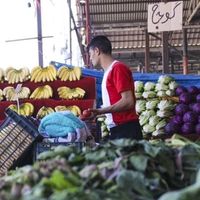
The Iranian rial has lost more than 50% of its value in the past six months, driving expectations of even higher inflation. Currently, the minimum wage stands at about $120 per month, while semi-official estimates indicate that at least $400 per month is needed to support a family of three.
The government is considering a wage increase of less than 50%, which would still leave workers struggling to afford basic necessities. However, even a smaller pay hike could further fuel inflation.