Iran did not seek military help from China or Russia, IRGC official says
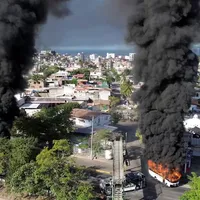
File photo of a Russian army vehicle
A senior commander in Revolutionary Guard said Tehran did not request military assistance from China or Russia during its recent 12-day conflict, adding that existing long-term cooperation agreements with the two powers do not include mutual defense obligations.
In a video published by the IRGC’s political affairs office, Brigadier General Yadollah Javani, the deputy for political affairs at Iran’s Islamic Revolutionary Guard Corps (IRGC), addressed recent public criticism about the limited support shown by Beijing and Moscow during the conflict, which saw multiple Israeli and US strikes against Iranian military and nuclear sites.
“Some people in society asked during the war why China and Russia, with whom we have 25-year and 20-year cooperation agreements, did not assist us,” Javani said. “The answer is that the nature of these agreements does not include mutual defense or obligations for either country to enter a war on the other’s behalf.”
Brigadier General Yadollah Javani, the IRGC’s Deputy for Political Affairs
Javani emphasized that Iran did not seek outside military support during the conflict. “The Islamic Republic did not request help from any country—not even from members of the Axis of Resistance,” he said, referring to Tehran-backed militia forces across the region.
Responding to suggestions that the long-term agreements with Beijing and Moscow implied mutual military backing, Javani said: “These are cooperation agreements that involve military collaboration, arms sales, and other areas. But unlike formal security pacts, they do not obligate the parties to come to each other’s defense in times of war.”
He offered an analogy: “For example, we have a military cooperation agreement with Moscow, but when Russia entered into a war with Ukraine, we were not obligated to support them, and likewise, they are not obligated to join us in any conflict.”
The comments come amid debate within Iranian media and political circles over what some perceive as tepid responses from Iran’s strategic partners.
During the conflict, Russia condemned USairstrikes on Iranian targets as “unjustifiable” and “aggressive,” while China called for restraint and dialogue. Both stopped short of offering any material or military assistance.
Iranian state media and officials have described the conflict, which lasted nearly two weeks, as a significant test of Iran’s defensive capabilities as well as its diplomatic alliances.
The Jomhouri-e Eslami daily recently criticized the Kremlin over the long-promised but undelivered S-400 air defense systems.
The same editorial questioned whether China would take concrete steps to address Iran’s defense vulnerabilities—or whether the 20-year strategic cooperation agreement would remain, in their words, “just a piece of paper.”
Despite this, Javani defended Russia’s role during the war. “President Vladimir Putin made notable diplomatic and political efforts in support of the Islamic Republic in international forums,” he said. “These are the types of actions we expect on the political level, and he delivered.”
An Israeli air force commander involved in the June war with Iran said the country has no choice but to prepare for another round of fighting, in an interview with Israel Hayom.
Known only as T, the commander of the 9th UAV squadron for the past three years, told the Israeli daily: "There is no arena in which we can rest on our laurels, and there is no choice but to prepare for another arena against Iran."
Israel has fought Iranian-aligned groups on several fronts since October 2023 and, most recently, engaged in its first direct conflict with the Islamic Republic.
"I believe that regarding Iran, situation assessments are being made, and all preparations against Iran are subject to the political echelon - when it is clear that right now we need to be prepared for any scenario."
He said that the country’s UAV array was critical in the 12-day war in Iran, which began with surprise air attacks on June 13 and saw dozens of top commanders, including the chief of staff, and multiple nuclear scientists killed on the first night alone.
“The big change here was our ability to bring the array to ... Iran, because the distance is enormous, the topography is different, and there are many threats and challenges along the way."
Last month, Iran's president said that the country is ready for further conflict with Israel as tensions continue to simmer, saying that he does not believe that the fragile ceasefire is final.
Masoud Pezeshkian told Al Jazeera Arabic, “We are fully prepared for any Israeli military action, and our forces stand ready to strike deep into the occupied territories once again,” stressing however that the country does not want war.
Tehran does not believe the threat from its enemies has ended following the June conflict with Israel, Iran’s top army commander said on Sunday, adding that the Islamic Republic’s missile and drone capabilities remain fully operational and intact.
"A 1% threat must be perceived as a 100% threat. We should not underestimate the enemy and consider its threats as over," Maj. Gen. Amir Hatami said on Sunday.
He added that the Islamic Republic's missile and drone power "remains standing and ready for operations."
Last month, Iran's president said that the country is ready for further conflict with Israel as tensions continue to simmer, saying that he does not believe that the fragile ceasefire is final.
Iran's government says 1,062 people were killed during the 12-day conflict with Israel, including 786 military personnel and 276 civilians. Iranian strikes also killed 29 civilians and one off-duty soldier, Israeli media reported.
Hatami, addressing senior commanders of the Army’s Ground Forces, accused Israel of pursuing various plots against Iran “under the illusion that it could harm the Islamic system.”
He said Tel Aviv’s “miscalculation” was exposed during the 12-day war, which saw Israeli strikes and Iranian retaliation in June. “With the miraculous steadfastness of the Iranian people, Israel realized it had made a strategic mistake."
“We continued our attacks until the very last moment before the ceasefire,” Hatami said, hailing Iran’s defense posture.
Hatami warned that the country’s adversaries should expect Iran to pursue its military and scientific development “with more resolve than ever.”
On Saturday, an Israeli air force commander involved in the June war with Iran said the country has no choice but to prepare for another round of fighting.
Known only as T, the commander of the 9th UAV squadron for the past three years, told Israel Hayom: "There is no arena in which we can rest on our laurels, and there is no choice but to prepare for another arena against Iran."
A new national plan for civil defense training and shelter preparedness has been approved, Iran’s top military official said Saturday, just days after Israeli media warned of another potential war with Tehran.
“The new directive defines the responsibilities of executive bodies in building and managing shelters and emergency housing,” said Major General Abdolrahim Mousavi, who chairs Iran’s Armed Forces General Staff.
The announcement follows a report aired Thursday by Israel’s Channel 12, which cited analysts warning that both Iran and Israel appear to be preparing for another round of fighting despite a ceasefire in their 12-day conflict in June.
Iranian President Massoud Pezeshkian also warned this week that “Israel may attack again at any moment,” adding that Iran’s armed forces are fully prepared to repel any aggression.
"Today, within the armed forces, we are pursuing different preparedness programs across three timeframes—short-term, medium-term, and long-term," Mousavi said. "Improving readiness in the civilian sector and securing infrastructure must also be addressed with this same approach."
The new civil defense directive comes as Iranian authorities face criticism over the country’s vulnerability to airstrikes.
During the war with Israel, observers highlighted the lack of functioning air defense systems, early warning sirens, and public shelters.
Iran's government says 1,062 people were killed during the 12-day conflict with Israel, including 786 military personnel and 276 civilians.
Iranian strikes also killed 29 civilians and one off-duty soldier, Israeli media reported.
Iran’s president will head a newly revived Defense Council, a body composed of top military and security officials that played a key role in Iran's military decisions during the 1980s, a Revolutionary Guards-affiliated outlet reported on Saturday.
The council’s formation was reported a day earlier by state media as part of what they called structural reforms to the Supreme National Security Council (SNSC).
Tasnim News, which is close to the Islamic Revolutionary Guards Corps, said the body is intended to oversee national defense policies and streamline military decision-making.
The Defense Council already existed in the Islamic Republic's Constitution and is now being revived decades after it was active during the early years of the Iran-Iraq war in the 1980s, Mansour Haghighatpour, a politician close to Ali Khamenei's advisor Ali Larijani, told Eghtesad News on Saturday.
Tasnim wrote that the formation of the Defense Council has taken place within the framework of Article 176 of the Constitution of the Islamic Republic, which allows the SNSC to establish “subsidiary councils such as the Defense Council and the National Security Council” in accordance with its responsibilities.
"The Council's objectives appear to be supporting the comprehensive strengthening of the country’s defense capabilities, as well as accelerating and improving the efficiency of decision-making in the defense sector," the Tasnim report said.
The council’s members will include the judiciary chief, parliament speaker, commanders of the IRGC and the army, the intelligence minister, the chief of the armed forces general staff, the commander of the Khatam al-Anbiya Headquarters, and two Supreme Leader representatives at the SNSC, it added.
Fars News, another outlet linked to the Revolutionary Guards, said Friday the Defense Council is part of a wider reconfiguration of Iran’s security apparatus.
“With structural reforms in the Supreme National Security Council finalized, informed sources report the establishment of a new body called the ‘Defense Council’ — a strategic council tasked with overseeing national defense policies, whose structure is expected to be finalized soon,” it wrote.
The same report said Larijani is expected to be appointed as the new SNSC secretary, replacing Ali Akbar Ahmadian.
Larijani, a conservative heavyweight and close advisor to Supreme Leader Ali Khamenei, would be tasked with “forward-driving and strategic missions that require overarching coordination and management,” according to Fars.
'Saving Islamic Republic from collapse'
The revival of the Defense Council is a positive development, Haghighatpour said on Saturday, adding that it would transform the General Staff of the Armed Forces into a coordinating body rather than a commanding one.
“If we face serious conflict and our forces are to enter the field—considering that the army and the Guards constitute a combined force, with two air forces, two ground forces, and two navies—all engaging together requires a central command,” he added.
“Command must have a designated deputy, ensuring we are not caught off guard at critical moments.”
The Tasnim report said that “given the new security challenges and the complexity of regional and global threats, the revival of the Defense Council could lead to greater agility and focus in the country’s defense decision-making.”
Iran International's senior analyst Morad Vaisi believes the formation of the Defense Council is not meant to defend the people or the country but "to defend the Islamic Republic and prevent its collapse.”
“The surprise in the 12-day war has shaken Khamenei’s confidence in the military commanders, and he is now seeking to build more institutions above the IRGC, army, and the General Staff of the Armed Forces," Vaisi said.
During the conflict with Iran in June, Israel's air force took control of Iranian airspace, delivering a significant blow to the country's air defenses, while Iran's armed forces responded with successive waves of missile and drone attacks on Israeli territory.
Israeli military officials say that 120 air defense systems were destroyed or disabled since the first wave of attacks—around a third of Iran’s pre-war total. Long-range systems, including Russian-supplied S-300s and Iran’s Bavar-373 batteries, were among those targeted.
Iran’s Islamic Revolutionary Guards Corps (IRGC) on Saturday slammed efforts to promote a two-state solution to the Israeli-Palestinian conflict, a few days after a UN conference co-chaired by Saudi Arabia pushed for the solution.
“These satanic efforts are prescribing a two-state solution to end the Palestinian issue,” the IRGC said in a statement, marking the first anniversary of the Israeli killing of Hamas leader Ismail Haniyeh in Tehran.
“But the resistance remains firm on the path of martyr Haniyeh and others.”
The Guards said the path forward lies not in political compromise but in continued resistance. Quoting a Hamas slogan attributed to Haniyeh, the statement said: “We do not recognize Israel—never, never, never.”
A High-Level International Conference for the Peaceful Settlement of the Question of Palestine and the Implementation of the Two-State Solution took place at the United Nations in New York from July 28-30, 2025.
The conference, co-chaired by France and Saudi Arabia, aimed to revitalize efforts towards a two-state solution between Israel and the Palestinians, with a focus on achieving a just and lasting peace.
Traditionally, Iran has advocated for the annihilation of Israel, rejecting a two-state solution that would create an independent Palestinian state alongside Israel. Supreme Leader Ali Khamenei said in 2015 that Israel must be destroyed within 25 years.
Gaza war
The IRGC's statement described the war in Gaza as a genocide carried out with the broader aim of seizing strategic and resource-rich regions of the Islamic world.
“Those who engineered the genocide in Gaza are undoubtedly pursuing larger goals—the swallowing of the Muslim world’s rich and strategic regions,” it said.
“But with God’s help, the breaking of global silence and the surge of anti-Zionist international protest will shatter the hopes and ambitions of the Zionist-American criminal band, which must now await the unmasking of its hidden fate.”
It also condemned the killing of Haniyeh in Tehran, which occurred while he was in the city for Iran’s presidential inauguration.
The IRGC credited continued Palestinian resistance to what it called the legacy of Haniyeh and other slain leaders of the anti-Israel struggle.
“The Aqsa Storm was not a passing event but a strategic doctrine sealed by the blood of martyrs,” it said, referencing the October 7, 2023 Hamas attack on Israel.
Since the October 7 attacks which saw at least 1,200 people killed and more than 250 more taken hostage by the militant group, Israel’s military campaign has killed over 53,000 people in Gaza, according to the Hamas-run Ministry of Health statistics.
The Israeli military says at least 20,000 of those are militants.
Accusing Israel of using starvation and siege as instruments of war, the IRGC called on international organizations to recognize such tactics as war crimes and to impose serious sanctions on the Israeli government.
“The deliberate creation of famine is a recognized crime against humanity,” the statement said.
The IRGC, a powerful parallel military in Iran with extensive economic and intelligence roles, was designated a terrorist organization by the United States in 2019 under President Donald Trump. Washington and Ottawa have called on European allies to follow suit.