Khamenei says talks pointless with deal-breaker Trump
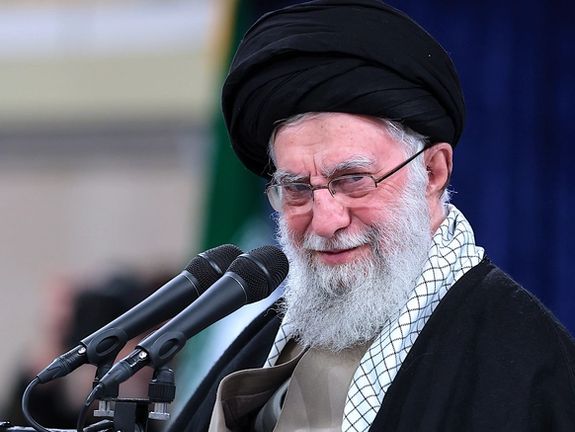
Iran's Supreme Leader Ali Khamenei during his meeting with students on March 12, 2025.
Iran’s Supreme Leader on Wednesday said President Trump's past withdrawal from a nuclear deal renders diplomacy with him pointless now and vowed harsh retaliation to any attack by the United States or its allies.
"The US President saying 'we are ready to negotiate with Iran' and calling for negotiations is meant to deceive global public opinion," Khamenei said in a speech to student supporters who per usual practice repeatedly chanted "death to America!"
The remarks by Iran's veteran theocrat were a rare barbed commentary on the policies of an individual US President and again strongly rejected Trump's fresh overtures for a new agreement.
"What’s the point of negotiating when we know he won’t stick with it," Khamenei said, referring to a 2015 international nuclear deal from which Trump withdrew after bashing it as too lenient on Iran.
"We sat down and negotiated for several years, and this very person took the completed, finalized and signed agreement off the table and tore it up."
Iran denies seeking a nuclear weapon but the UN's nuclear watchdog last week pointed to a sharp rise in Tehran's stockpile of highly enriched uranium.
"If the Islamic Republic intended to build nuclear weapons, the United States would not be able to stop it," Khamenei added, again saying Iran had decided against seeking a bomb.
As he delivered his speech, an Emirati diplomat arrived in Tehran carrying a direct letter from Trump to Khamenei urging talks. "I have not received the letter that the US president claims has sent," Iran's supreme leader said.
President Trump revealed on Friday that he had sent a letter to Khamenei offering negotiations while warning of military action if talks failed.
“There are two ways Iran can be handled: militarily or through a deal. I would prefer to make a deal," Trump told Fox Business Network.
Trump later added that the standoff with Iran had reached a critical stage: “We are at final moments with Iran."
Khamenei said Washington would come off the worst if it attacked Iran.
"The United States is threatening militarization. In my view, this threat is irrational because war is not a one-sided blow; Iran is capable of retaliating and will certainly do so," he said.
"If the Americans or their allies make a wrong move, they will be the ones to suffer the greater loss."
Israel sees Iran's nuclear sites as more vulnerable than ever after Oct. 26 Israeli air strikes on its air defenses, defense minister Israel Katz said in November.
Iran's arch-foe sees Tehran's perceived weakness and Trump's hawkish stance providing a window for an attack on the nuclear program it views as an existential threat, according to US intelligence assessments cited by the Wall Street Journal and Washington Post.
Iran stands alone
Khamenei proudly declared in his speech that Iran was the sole holdout in resisting the demands of the world's bullies.
"Today, the world's bullies say everyone must obey us and must put our interests ahead of their own, but Iran is the only country that has categorically rejected this." Khamenei said in a speech to student supporters.
Iranian officials have cited a blowup between Trump and Ukraine's President Volodymyr Zelenskyy in the White House as a sign of the United States' fickleness and bullying on the world stage.
Khamenei, a champion of defying the West and Israel, has repeatedly ruled out talks with the United States since Trump took office.
Addressing Iran's dire economic straits, Khamenei appeared to dismiss hopes from political moderates including his own president Masoud Pezeshkian that a diplomatic breakthrough could ease punishing US-led sanctions.
"If the goal of negotiations is to lift sanctions, negotiating with this US government will not remove them. Rather, it will tighten the knot."
"Sanctions are not without impact, but if our economic situation is struggling, it is not solely because of sanctions. Our own negligence also plays a role," he added, saying domestic ingenuity could mitigate sanctions' pain.
The Islamic Republic, he insisted, had not been weakened by the deaths and killings of key political and military figures in recent years.
Over a year of punishing direct and regional combat pitting US-armed Israel against Iran and its militant allies in the Middle East has hollowed out Iran's influence and may have dealt its geopolitical standing a historic setback.
"This year, in some matters, we are stronger than last year," the Supreme Leader said.
The United States on Wednesday sanctioned a Swedish criminal gang accused of assisting Iran in attacks on European soil, days after a former commander in Tehran revealed foreign groups had helped in killing dissidents in the past.
According to the US treasury, the gang known as the Foxtrot network has carried out attacks on Israelis and Jews in Europe and "orchestrated an attack on the Israeli Embassy in Stockholm" on behalf of Iran.
"Iran’s brazen use of transnational criminal organizations and narcotics traffickers underscores the regime’s attempts to achieve its aims through any means, with no regard for the cost to communities across Europe,” US treasury secretary Scott Bessent said in a statement.
The sanctions were hailed by US Secretary of State Marco Rubio who said in a post on X that the move "makes us and our partners safer".
On Tuesday, Sweden's Security Police (SAPO) warned that the Scandinavian nation faces an escalating security threat from Iran, which has intensified its intelligence activities and use of criminal networks within the country.
"Iran's primary objective is to secure and strengthen its regime, closely linked to protecting the country from perceived external threats and circumventing sanctions," SAPO said in a statement.
Sanctioned alongside Foxtrot is its leader Rawa Majid, known also as the Kurdish Fox, who faces several charges of arms and narcotics trafficking in Sweden.
"Rawa Majid (Majid), who leads the gang, has specifically cooperated with the Iranian Ministry of Intelligence and Security (MOIS)," the statement by US treasury read.
The move comes amid heightened tensions between Stockholm and Tehran, and follows shock admission by Iran's former Revolutionary Guards minister Mohsen Rafiqdoost this week that revenue from arms deals helped finance Tehran's assassinations of political opponents overseas in the 1980s and 1990s.
“The Basque separatist group in Spain carried out these assassinations for us. We paid them, and they conducted the killings on our behalf,” he said referring to the assassinations of a former Iranian prime minister and a former Iranian military commander in Paris, France in 1984.
A senior Emirati diplomat will personally convey to his Iranian counterparts in Tehran a letter from US President Trump urging a nuclear deal, Iran’s foreign ministry said on Wednesday.
"Anwar Gargash, the diplomatic advisor to the President of the United Arab Emirates, will meet and hold consultations with Abbas Araghchi, the Foreign Minister, later today. During this visit, he is carrying a letter from Donald Trump, the President of the United States, to Iran," said Esmail Baghaei, Iran’s foreign ministry spokesperson in an interview with ISNA.
Earlier on Wednesday, Iran’s Foreign Minister Abbas Araghchi said that an Arab intermediary would deliver a letter from US President Donald Trump to Tehran, just days after Iran had denied the existence of such a letter.
On Friday, Trump said that he had sent a letter to Iran's Supreme Leader Ali Khamenei, offering negotiations while warning of military consequences if talks over its nuclear program failed.
A day after Trump publicly revealed his letter, Khamenei made a speech in which he made no mention of the letter but declared that the Islamic Republic would not negotiate with "bullying" powers.
During the week, Iran’s foreign minister and the ministry’s spokesman said that Tehran had not received any letter from Trump,
The belated admission by Iran of Trump's reaching out his hand for negotiations comes on the back of Wednesday's announcement of a closed doors UN Security Council meeting over Iran's nuclear program, news which has infuriated Tehran.
Araghchi said: "A closed-door meeting of the UN Security Council has been requested, which is a completely new procedure and surprising, and questions the goodwill of the countries requesting this meeting."
It had been requested by France, Greece, Panama, South Korea, Britain and the US as Tehran's nuclear program edges ever closed to weapons grade uranium.
"We have always been ready to negotiate on the nuclear issue from an equal position, and we have also negotiated on the JCPOA, and negotiations are ongoing," Araghchi added.
He said that Iran would soon have a fifth round of talks with the European powers forming part of the nuclear deal -- France, Britain and Germany -- and confirmed a meeting in Beijing on Friday with the other members, Russia and China.
"The United States withdrew from the JCPOA a long time ago, and we are negotiating with three European countries, and a new round of it will be held soon," he noted.
On Tuesday, President Masoud Pezeshkian lambasted Trump's threat of military action if Tehran did not come to a nuclear deal, saying the Islamic Republic would not be forced to negotiate.
"What (Trump) did to that Zelensky is truly shameful," the relatively moderate president said, referring to an Oval office showdown between Trump and the Ukrainian president - Washington's erstwhile wartime partner.
Iranian officials have cited the blowup as a sign of the United States' bullying on the world stage. Tehran has resisted Trump's overtures for a new deal over its nuclear program and its Supreme Leader Ali Khamenei has ruled out talks.
Khamenei, Iran's top decision-maker, has repeatedly rejected the notion after insisting the United States cannot be trusted.
Iran's President Masoud Pezeshkian lambasted US President Donald Trump's threat of military action if Tehran did not come to a nuclear deal, saying the Islamic Republic would not be forced to negotiate.
"What (Trump) did to that Zelensky is truly shameful," the relative moderate president said, referring to an oval office scrap between Trump and the Ukrainian president - Washington's erstwhile wartime partner.
Iranian officials have cited the blowup as a sign of the United States' fickleness and bullying on the world stage. Tehran has resisted Trump's overtures for a new deal over its nuclear program and its Supreme Leader Ali Khamenei has ruled out talks.
"It is unacceptable to say, ‘We give orders to do this (or) not to do that," Pezeshkian said. "I will not come to (negotiate with you). Do whatever the hell you want!"
Faced with deepening economic malaise wrought by US-led sanctions, Pezeshkian had repeatedly advocated for talks with Washington to chip away at Iran's isolation and mitigate deepening financial pain which threatens unrest.
Khamenei, Iran's top decision-maker, has repeatedly rejected the notion after insisting the United States cannot be trusted.
The recent admission by a former Revolutionary Guards minister about orchestrating the killing of dissidents on European soil in the 1980s and 1990s shed light on Tehran's ruthless suppression of opponents abroad.
In a video interview published by Didehban-e Iran, Mohsen Rafiqdoost, a founding member of the Islamic Revolutionary Guard Corps (IRGC) and its minister from 1980 to 1999, described his role in funding covert operations abroad. His statements indicated that Iran was directly involved in orchestrating political assassinations beyond its borders.
His office in a statement on Monday attributed the shock admissions to his mental debilitation after a brain surgery despite the release of a hitherto unpublished segment of another video interview in 2018 in which Refiqdoost had made similar claims.
Political implications and reactions
Iranian-Canadian political analyst Shahir Sahidsaless speculated in an X post on Tuesday that Rafiqdoost’s admission to multiple assassinations could not have been “accidental, inadvertent, or unplanned.” He suggested that these revelations are tied to Iran-US negotiations and potential sanctions relief. According to Sahidsaless, the IRGC, which holds significant economic power in Iran, benefits from ongoing sanctions and may be attempting to undermine diplomatic efforts by confirming Iran’s involvement in assassinations.
"Rafiqdoost's confessions are deliberately intended to block any possibility of negotiations [with the United States] and the lifting of sanctions," Sahidsaless wrote. He argued that assassinations in the West go beyond Iran's support for militant groups, a longstanding point of contention with Western governments. These admissions, he said, amount to an acknowledgment that the government has directly ordered and carried out killings abroad.
Thus far, European governments and the United States have not responded to these claims. Sahidsaless speculated that the lack of immediate reaction might be due to ongoing diplomatic considerations, including US efforts to engage with Tehran.
Possible diplomatic fallout
Sahidsaless warned that this controversy could lead to intensified international pressure on Iran, including the formal designation of the IRGC as a terrorist organization in Europe and strengthened European support for US-imposed sanctions. If negotiations fail and Iran persists in advancing its nuclear program, these admissions could provide further justification for punitive measures.
Ahmad Bakhshayesh, a conservative member of the Iranian Parliament’s National Security and Foreign Policy Committee, similarly referred to the importance of the timing and impact of Rafiqdoost’s controversial interview. “Foreign [powers] will take this as a true statement,” Bakhshayesh told the Iranian Labour News Agency on Monday.
While acknowledging that Rafiqdoost’s claims might contain some truth, he criticized the general for discussing classified matters at a time when Iran is under maximum pressure. “This is injustice to the country, especially in the current circumstances that we are under maximum pressure.”
Who were the victims?
According to Rafiqdoost, the victims included dissidents as well as high-profile figures such as Shapour Bakhtiar, Iran's last prime minister under the Shah, who was assassinated in Paris in 1991, and General Gholam-Ali Oveissi, the chief commander of the Imperial Iranian Armed Forces, who was killed in Paris in 1984.
“The Basque separatist group in Spain carried out these assassinations for us. We paid them, and they conducted the killings on our behalf,” he said.
Rafiqdoost’s admissions could be potentially used by the families of victims in European courts as evidence if they choose to sue the Islamic Republic as a sponsor of terrorism.
Hossein Mousavian, Iran’s former ambassador to Germany (1990–1997) and a senior nuclear negotiator, tweeted that he was :stunned, amazed and shocked" by the revelations, particularly regarding the killing of dissident artist Fereydun Farrokhzad in Munich in the 1990s. However, Mousavian himself has long faced allegations of involvement in Iran’s overseas assassination campaigns. Opposition groups have accused him of orchestrating over 20 assassinations in Europe, including the notorious Mykonos restaurant killings in Berlin in 1992, where four Kurdish leaders were murdered by Iranian agents.
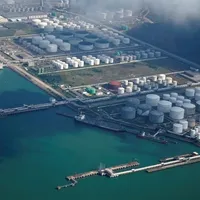
The Trump administration will ensure the enforcement of sanctions on Iranian oil exports in a bid to return to the levels seen in the President's first term after sales rose under Biden, according to the country's energy minister.
“When he was president last time, Iranian oil exports shrunk down to very modest levels. Biden didn’t remove those sanctions, but he stopped enforcing them," Chris Wright told Bloomberg on Monday.
“That enriched Iran. And now we’ve seen what’s happened with the Houthis, Hezbollah and Hamas. It’s been mayhem. So is President Trump looking to stop the mayhem and bring peace to the world? Absolutely. Can we afford the squeezing off of Iranian oil exports? Absolutely.”
The move would be part of Trump’s renewed "maximum pressure" campaign, aimed at cutting Iran’s oil exports to zero in a bid to force Tehran into talks over its nuclear program.
Last week, Reuters reported that the Trump administration is considering a plan to inspect Iranian oil tankers under an international accord designed to curb the spread of weapons of mass destruction.
Washington has blacklisted more than two-thirds of the 150 vessels that transported Iranian crude last year.
More than half of the tankers sanctioned by the United States have ceased operations outside Chinese or Iranian terminals, an investigation by Iran International revealed last month.
US sanctions on tankers and companies involved in Iran's oil trade are slowing shipments to China but trade with one of Iran's most important allies continues in 'dark mode' in spite of maximum pressure, according to a Bloomberg report on Sunday.